
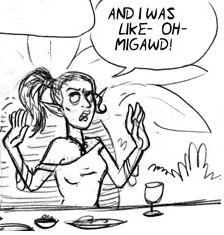
Voice reveals level of consciousness. Beyond words, it’s been my number-one indicator of truth or falsehood. If you believe a thing your voice is strong, resonant, relaxed. If you’re lying, your voice falters, cracks or gets thin. Only trained actors can override their real emotions convincingly.
An image from one of my books in which voice was explored:
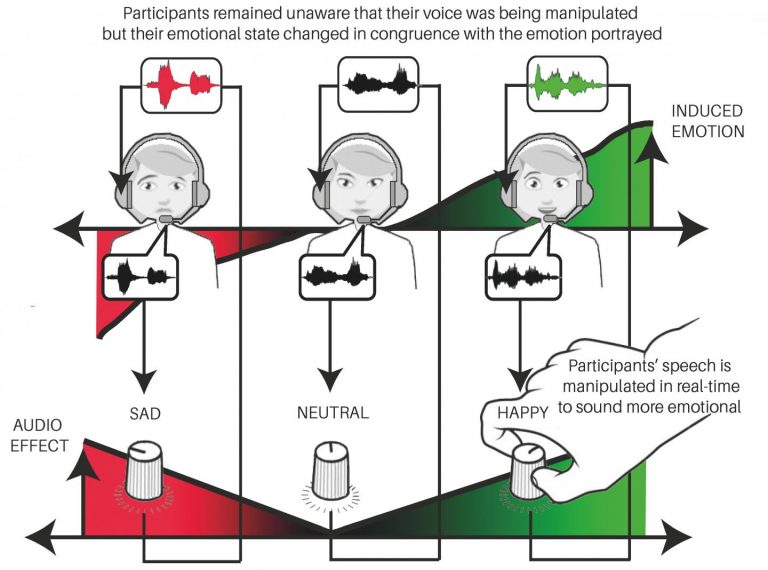
Voice not only indicates consciousness, attitude and state, it also alters it. It’s a two-way street. By changing your own voice, you can change your state. Hearing an unpleasant voice can make you feel unpleasant. Hearing a nice voice calms you.
In this article I’d like to examine an American phenomenon called “Uptalk”. It started in the 1980s with women making statements that sounded like questions.”I like pink shirts” would then sound like “I like pink shirts?” as the tonality rises at the end of the sentence. To my ears it’s made the speaker sound insecure or unsure of themselves. Turning everything into a question does not exude confidence. A bit later, maybe by the early 2000s, men also began talking this way.
Today it is a normal part of American speech. Most people in urban places wouldn’t even recognize it as anything unusual.
Watch this brief 1994 video (or at least the first minute of it), made at a time when “Uptalk” was still a new phenomenon and widely mocked.
Curious as I am, I researched. From the Wikipedia article “Valley Girl” (bolding mine)
A valley girl is a socioeconomic, linguistic, and youth subcultural stereotype and stock character originating during the 1980s: any materialistic upper-middle-class young woman, associated with unique vocal and California dialect features, from the Los Angeles commuter communities of the San Fernando Valley. In subsequent years, the term was broadly applied to any American woman who epitomized frivolity, ditziness, airheadedness, or who prioritizes superficial concerns such as personal appearance, physical attractiveness, and excessive materialism over intellectual or personal accomplishment
Valleyspeak, or Valspeak, is a California English social dialect and accompanying vocal features, best associated with valley girls, though elements of it have spread to other demographics, including men called “Val dudes”. This sociolect became an international fad for a certain period in the 1980s and 1990s, with a peak period from around 1981 to 1985. Valleyspeak is popularly characterized by both the steady use of uptalk and its vocabulary
This lends itself to explicit language ideologies about dialects in the area as they receive more scrutiny than dialects in other nearby regions. Linguistic characteristics of valleyspeak are often thought to be “silly” and “superficial” and seen as a sign of low intelligence. Speakers are also often perceived as “materialistic” and “air-headed”. The use of “like” or the quotative phrase “be like” are often ideologically linked to California and Valleyspeak despite the now-widespread use of the terms among youth, which results in their also receiving the “superficial” cast. In the national understanding, California speech is thought to be a product of the combination of Valley girl and surfer dude speech, and “is associated with good English, but never proper.
Here we learn that Uptalk originated in San Fernando Valley (Hollywood) and that it was originally associated with low intelligence.
Today, it’s miraculously associated with higher intelligence. From the Wikipedia article “Influencer Speak” (bolding mine):
Influencer speak is a speech pattern commonly associated with digital content creators, particularly on platforms such as TikTok. This style is characterized by linguistic features such as uptalk, where intonation rises at the end of declarative sentences, and vocal fry, a low, creaky vibration in speech. These features are often used to engage audiences
Linguists have noted that these patterns are often led by young women, who are recognized as linguistic innovators in sociolinguistic research.
“Influencer speak” is used to maintain audience engagement. Features such as uptalk help speakers retain the “conversational floor,” ensuring continuous attention from listeners
The meaning of “Uptalk” has changed over time. Sociolinguistic researchers and academics now say that women who use it are not airheaded idiots but rather linguistic innovators who understand how audience engagement works.
I asked Grok AI about this, and it said:
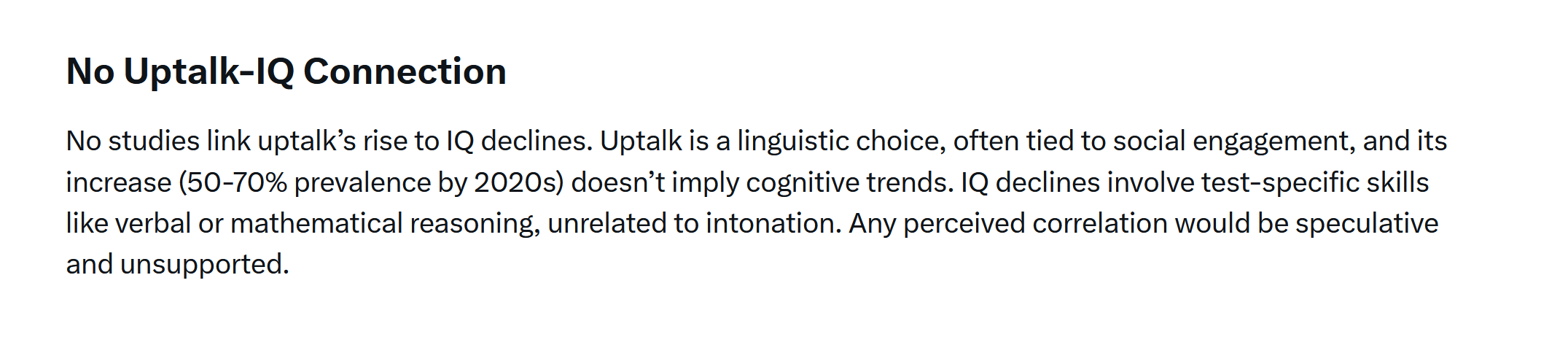

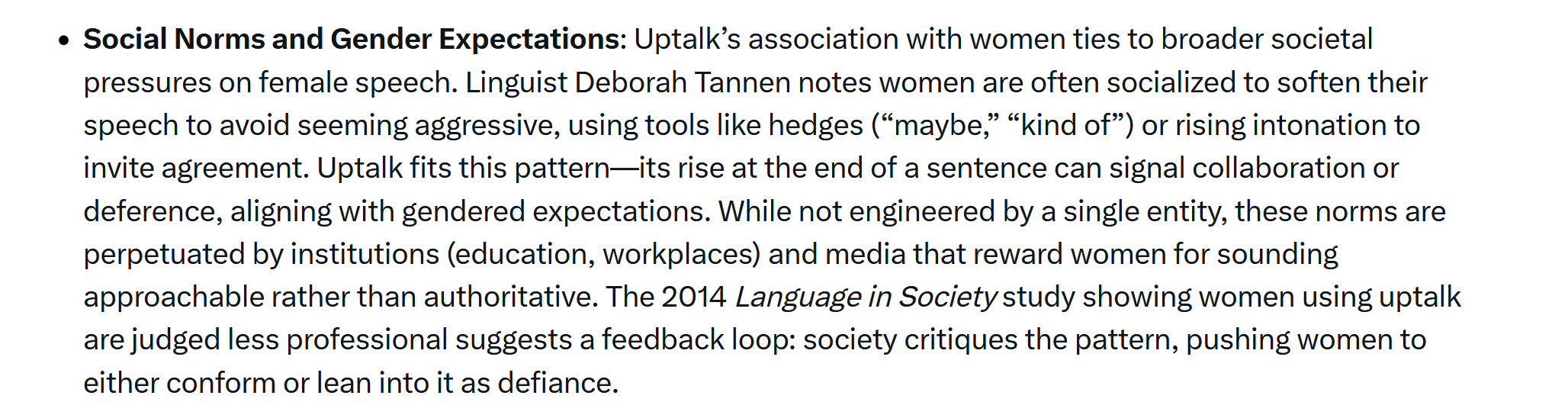
I share this so that you see that uptalk has been reframed from indicating stupidity to being something positive. This shift in perception is inevitable, considering that almost everyone below a certain age talks like this.
But if you watch older movies, documentaries and interviews from the 70s, 60s and 50s you’ll find that women generally didn’t talk this way. The linguist that AI keeps citing here has, like many other people, merely re-framed what uptalking means.
The first known public use of Uptalk was by the singer Frank Zappa and his daughter Moon Zappa in the 1983 song “Valley Girl”.
It’s a relatively gentle form of uptalk and like-talk compared to what was to come.
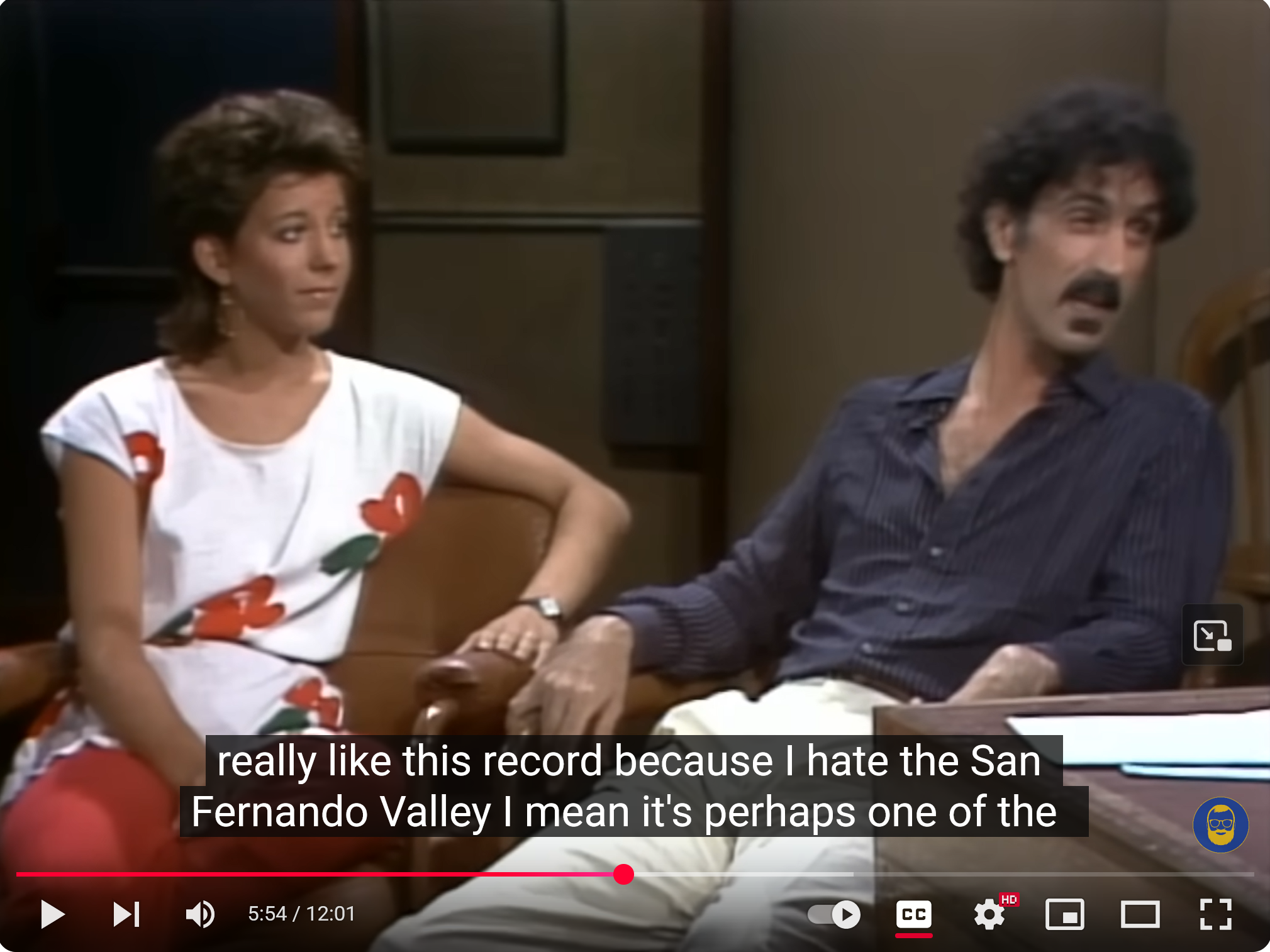
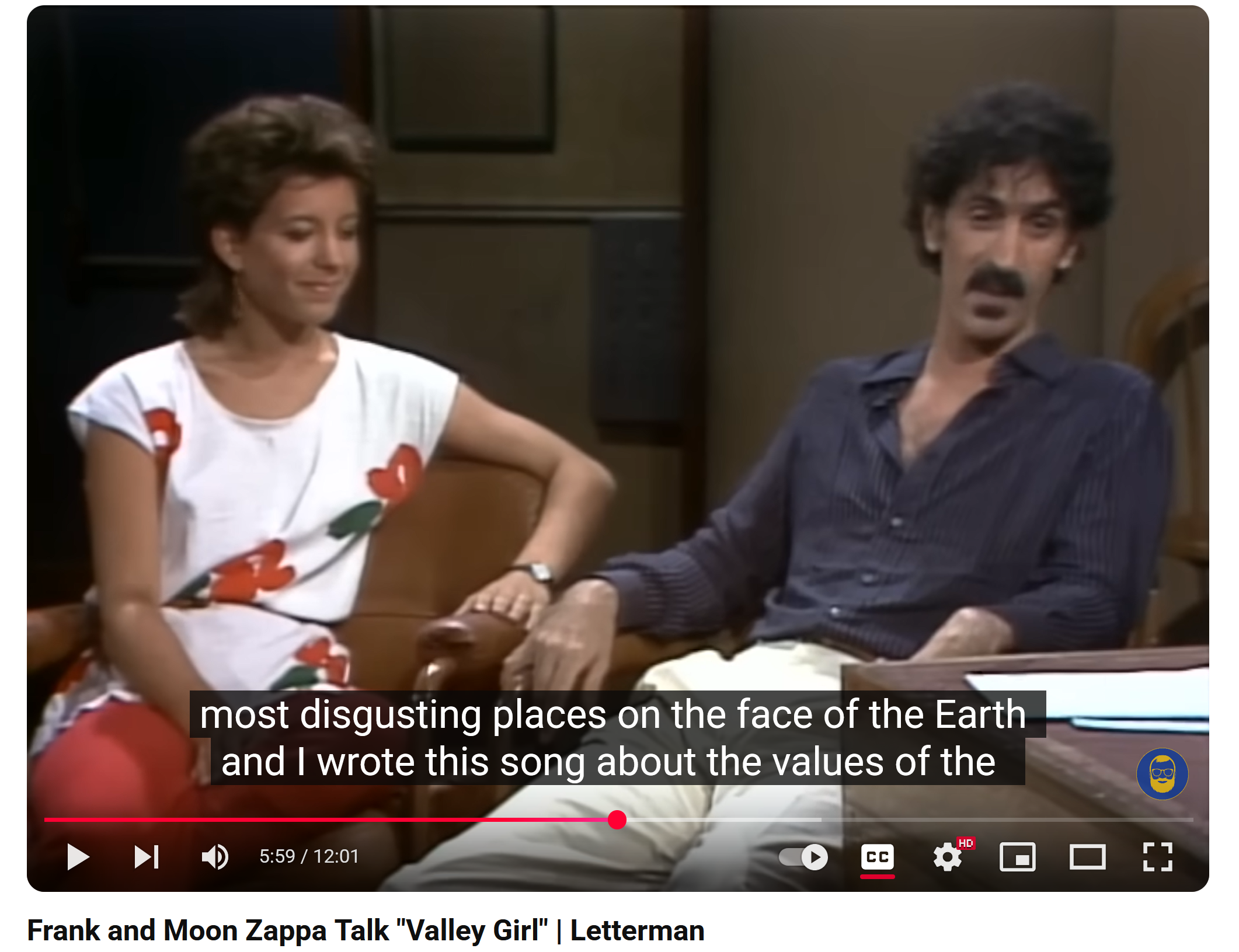
Zappa made the song to mock and ridicule uptalk. In an interview Moon and Frank Zappa did with show host David Letterman (which you can find online), Zappa says he made the song because he hates San Fernando Valley and it’s “the most disgusting place on Earth”.
Contrast that with what politically correct academics say about uptalk being “empowering to young women”.
Of course there’s also the possibility that overall IQ and consciousness levels have dropped. One of the errors of modern academia is the assumption that we are always evolving, never declining.
The San Fernando Valley is not only home to Hollywood. From the Wikipedia article on San Fernando Valley
The valley became the pioneering region for producing adult films in the 1970s and grew to become home to a multibillion-dollar pornography industry, earning the monikers Porn Valley, Silicone Valley (for breast implants, in contrast to Silicon Valley, nickname for the Santa Clara Valley),and San Pornando Valley. According to the HBO series Pornucopia, at one time, nearly 90 percent of all legally distributed pornographic films made in the United States were either filmed in or produced by studios based in the San Fernando Valley.
Maybe that weak, creaky uptalk voice does not originate in female empowerment but rather, abuse of females through cut-throat film industry practices?
In the late 1980s and 1990s the uptalk, “like” and vocal fry manner of speaking was heavily promoted in Hollywood. Long running shows such as
Clueless,
Beverly Hills,
90210
made it look like girls who were part of Hollywood high society talked like this and so everyone should. And because people are easily influenced by what they see on TV, an entire generation all over America started imitating the tone.
According to linguist Penny Eckert,